After the Bell: The Hidden War Fighters Face When the Career Is Finally Over
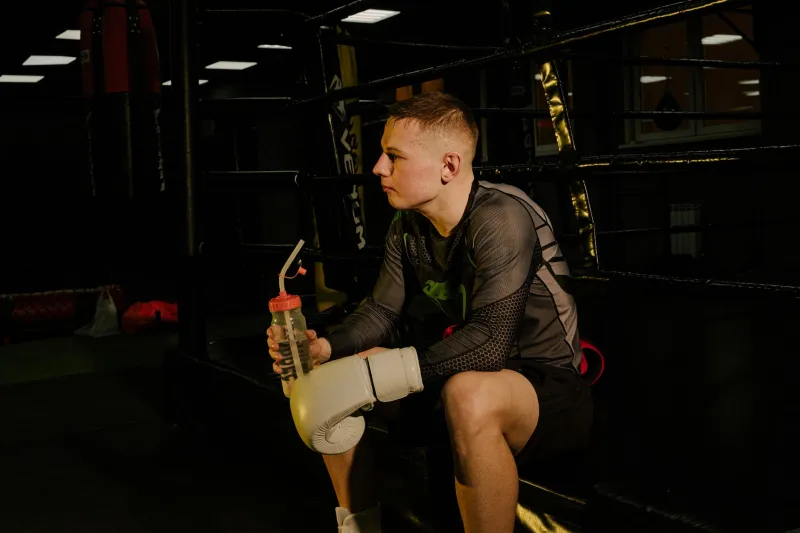
There's a moment every combat athlete eventually faces. Not the one where the referee waves it off. Not the one where the doctor says your knee is done, or your manager stops returning calls. It's quieter than that. It comes maybe three weeks after the last fight, when you wake up on a Tuesday morning with nowhere to be, nobody expecting you to bleed for them, and a body that finally — finally — doesn't hurt.
And somehow, that's the worst feeling of all.
Retirement from combat sports is one of the least discussed psychological transitions in American athletics. We celebrate the highlight reels. We analyze the losses. But the day-after-the-day-after? That part stays dark.
The Identity Isn't Just a Job — It's a Whole Architecture
Ask any former professional fighter what they did for a living, and they'll still say fighter. Present tense. Even years out. That's not ego — that's psychology.
For someone who has spent a decade building their entire life around competition, the fighter identity isn't a role. It's the load-bearing wall of who they are. The alarm at 5 a.m. The two-a-days. The diet. The sparring partners who know exactly how you move. The gym that smells like sweat and rubber mats and something close to purpose. Strip all of that away, and you're not just unemployed. You're structurally unsound.
Dr. Leah Strand, a sports psychologist who has worked with combat athletes transitioning out of competition, puts it plainly: "Most of these guys built every single decision around their athletic identity since they were teenagers. When that's gone, they don't just lose a career. They lose their entire framework for understanding themselves."
It's a phenomenon researchers call athletic identity foreclosure — when someone invests so completely in a single role that they never develop the psychological scaffolding for anything else. And in combat sports, where the culture actively rewards obsession, it runs deep.
The Adrenaline Debt
There's a physiological component here that doesn't get nearly enough attention. Fighters aren't just emotionally addicted to competition — their nervous systems are literally calibrated for high-stress environments.
Years of intense training and competition reshape the body's stress response. Cortisol cycles, dopamine thresholds, adrenaline sensitivity — all of it gets tuned to a different frequency. When that stimulus disappears, the withdrawal is real. Former fighters describe it in strikingly similar terms: a flatness, a grayness, a sense that ordinary life is running at the wrong speed.
"Everything felt muted," said one former regional MMA champion from the Midwest who asked to remain unnamed. "I'd go to a barbecue with my family and feel like I was watching it through glass. Nothing registered. I wasn't depressed, exactly. It was more like I was bored of being alive."
That kind of anhedonia — the inability to feel pleasure from things that used to matter — is a documented pattern in post-competition athletes. In combat sports, where the highs are particularly extreme, the valley on the other side can be brutal.
When the Unraveling Starts
Not every fighter crashes. But enough do that the pattern is impossible to ignore.
Substance abuse rates among retired combat athletes are disproportionately high. So are divorce rates, financial collapse, and depression diagnoses. Some fighters chase the feeling in dangerous ways — picking fights, taking underground bouts they have no business taking, putting themselves back in harm's way not for money, but for the only thing that ever made them feel fully alive.
Others simply disappear. They leave the gyms, stop answering messages from old training partners, and quietly try to become someone new — often without any real roadmap for how to do that.
"The hardest part wasn't the pain or the losses," said a former professional kickboxer who now runs a landscaping company in Tennessee. "It was that nobody told me there was a life after. In the gym, we talked about fighting forever. We never talked about what comes next."
That silence is part of the culture. Talking about the end feels like weakness. Admitting you might not be a fighter someday feels like giving up. So the conversation never happens — and then the day arrives, and nobody is ready.
The Ones Who Rebuild
Here's the other side of that coin, though: plenty of fighters do find their way through. And the ones who come out intact tend to share a few things in common.
First, they usually had something outside the gym — a relationship, a side project, a community role — that they'd been quietly investing in all along. Not as a backup plan, exactly, but as proof that they existed beyond the sport.
Second, they find ways to stay connected to the world they came from without being consumed by it. Coaching is the most obvious path. Teaching is another. Some fighters move into commentary, promotion, or advocacy work for fighter safety. The key isn't distance from combat sports — it's a shift in role. From warrior to guide. From competitor to keeper of the craft.
Third — and this one's harder to quantify — they let themselves grieve. They don't pretend the career ending is just a chapter closing. They treat it like the loss it actually is. They sit with the sadness, talk about it honestly, and give themselves permission to mourn something that genuinely mattered.
"I cried for about a week straight when I finally admitted I was done," said a former collegiate wrestler turned amateur MMA competitor from Ohio. "And then something shifted. I stopped trying to get back to who I was and started figuring out who I could be."
What the Fight Was Really For
Maybe that's the deepest question retirement forces a fighter to answer: what was the fight actually about?
For some, it was about proving something — to a parent, to a bully, to a version of themselves that felt small. Once that proof is established, the fighting has done its job. The warrior doesn't disappear; they just don't need the arena anymore.
For others, the fight was always about the process itself — the discipline, the brotherhood, the daily confrontation with difficulty. Those things don't have to end when the competition does. They just need a new container.
The lost fist doesn't have to stay lost. It can open. It can teach. It can build something.
But first, the fighter has to be willing to look at themselves without the gloves on — and that might be the most honest bout of their entire career.