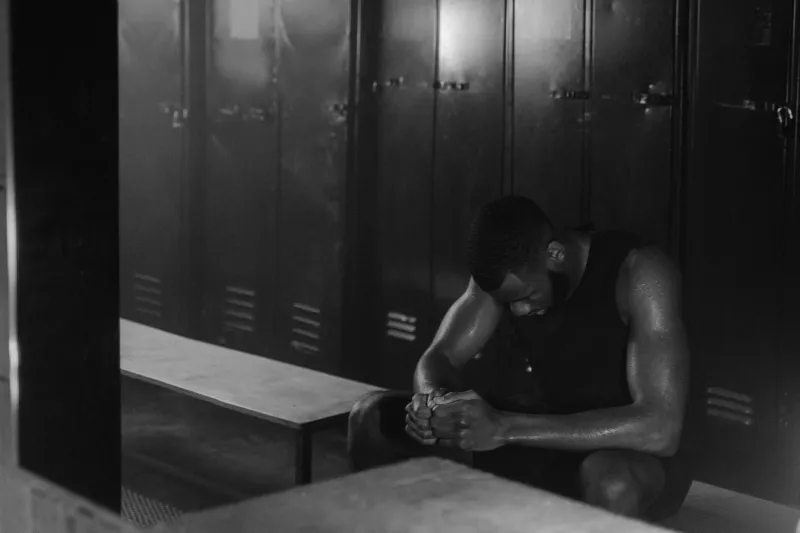
Ghost No More: The Quiet Science Behind Fighters Who Vanish and Return Deadlier Than Before

There's a particular kind of silence that falls over a fight crowd when someone they'd mentally retired walks out to the cage. Not polite applause. Not nostalgia. Something closer to confusion — the kind that turns into electricity real fast when the person standing across the octagon starts looking nervous.
Fighters who disappear and come back dominant aren't accidents. They're not feel-good stories, either. They're the product of something most people in combat sports never slow down long enough to understand.
The Exit Nobody Respects
When a fighter steps away — really steps away, not the "taking some time" variety that means three months — the narrative writes itself fast. The commentators get philosophical. Social media moves on. Promoters quietly stop returning calls.
What almost nobody considers is that the exit itself might be the smartest move the fighter ever made.
Burnout in combat sports is different from burnout in other professions. It's not just mental fatigue. It's a full-system shutdown — nervous system dysregulation, hormonal imbalance from years of cutting weight, accumulated micro-trauma in joints and connective tissue that never got a real window to heal. The fighter who walks away isn't always broken. Sometimes they're the only one in the room reading the situation correctly.
The ones who return successfully almost always describe the layoff the same way: the first few months felt like failure, and then something shifted. The body started doing things it hadn't done in years. Sleep improved. Reaction time sharpened. Old injuries that had been managed — meaning masked — finally closed up.
"I didn't realize how wrecked I was until I wasn't wrecked anymore," one regional circuit veteran put it. "Coming back, I felt like I was 24 again. Except I knew things I didn't know when I was 24."
The Knowledge Gap That Absence Creates
Here's the part that genuinely surprises people: time away from competition is not the same as time away from learning.
Fighters who use their layoff intentionally — studying tape, drilling technique without the pressure of a fight camp, working with coaches outside their usual circle — often return with a conceptual understanding of their own game that years of active competition hadn't produced. There's a reason some of the most technically sophisticated fighters in any discipline came back from extended breaks looking like different people. They essentially were.
The sport also moves during an absence. Trends shift. New entries in the game bring fresh looks that the established guys haven't seen. A returning fighter who's been paying attention walks back in with analytical distance — they've watched the current meta develop without being inside it, which gives them a perspective that active competitors rarely have time to develop.
Coaches who specialize in working with returning fighters talk about this constantly. The mental slate is cleaner. The ego has been through the grinder of irrelevance and survived. What's left is usually a more coachable, more focused athlete than the one who left.
What the Body Remembers
Motor memory is stubborn in the best possible way. Techniques that took thousands of repetitions to groove don't evaporate during a layoff — they consolidate. Sleep, reduced cortisol load, and time away from impact actually improve the retention and refinement of complex movement patterns. Neurologically, a fighter returning after a genuine rest period often accesses their technical base more cleanly than they could during the grind of an active schedule.
The physical recalibration is real, but it has a window. Fighters who've studied this — and some absolutely have — tend to time their return carefully. Coming back too early means the body hasn't finished its repair cycle. Waiting too long creates a different problem: the detraining effect starts eating into cardiovascular base and fast-twitch muscle responsiveness.
The sweet spot, according to sports physiologists who work with combat athletes, tends to fall somewhere between eighteen months and three years for most fighters. Long enough to genuinely reset. Short enough that the athletic foundation is still structurally sound.
The Psychological Edge Nobody Talks About
Fear is a performance variable. Most active fighters won't admit how much of their decision-making inside the cage is colored by the anxiety of maintaining rank, protecting a record, or satisfying promotional obligations. These are real pressures and they create real cognitive load during competition.
A fighter returning from a long absence has already lost everything — at least in the perception of the world around them. That's a strange kind of freedom. There's no rank to protect because the rank is gone. There's no momentum to preserve. The entire fight is upside, and the human brain performs differently when risk calculus shifts that dramatically.
Some fighters describe this as the best they've ever felt walking into a fight. Loose. Present. Genuinely curious about what's going to happen instead of terrified of the wrong outcome.
That psychological posture is hard to manufacture and almost impossible to fake. Opponents feel it. Experienced fighters know the difference between someone who's scared underneath the bravado and someone who genuinely has nothing to lose — and has decided that's a gift rather than a problem.
The Ones Who Don't Make It Back
For every fighter who returns and shocks the room, there are several who don't. The pattern in failed comebacks is consistent enough to be instructive.
The fighters who come back for external reasons — financial pressure, ego, the inability to accept the identity shift of retirement — almost never recapture what they had. The motivation isn't clean, and the body can tell. Training becomes a negotiation rather than a commitment. The preparation is incomplete because some part of the fighter is still ambivalent about being there.
Physical reality also matters. There are injuries that heal and injuries that don't, and the line between them isn't always visible from the outside. Fighters who return without honestly assessing that distinction end up confirming everyone's worst assumptions about comebacks rather than defying them.
The mental reset has to be genuine, too. Fighters who carry unresolved bitterness about how their career stalled — who come back looking for revenge on the sport itself — tend to find that the sport doesn't particularly care about their feelings and will demonstrate this efficiently.
The Legend Doesn't Care About Your Timeline
What makes the successful return so compelling, beyond the spectacle, is what it says about the nature of development in combat sports. The conventional narrative runs in one direction: young, hungry, physically peak, then decline. The fighters who come back and win are rewriting that story in real time.
They're not defying age or physics. They're demonstrating that the variables in play are more complex than the simple graph of physical decline. Experience, strategic intelligence, psychological maturity, and a body that's actually been allowed to recover — these things have value that doesn't appear on a highlight reel but shows up consistently in the scorecards.
The ghost who walks back through the door isn't the same person who left. That's exactly the point. And the division that wrote them off is about to find out the hard way.