The Damage You Can't See: What Fighters Are Really Carrying — and Why They're Not Telling You
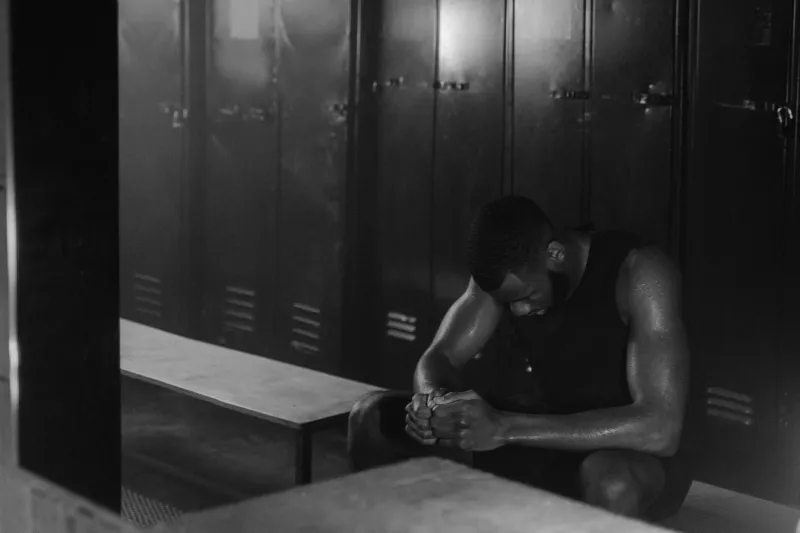
The press conference answer is always some version of the same thing. Feeling great. Best camp of my career. Ready to go. The camera moves on and nobody asks the follow-up, which is probably fine because the follow-up would get the same non-answer anyway.
What fighters are actually carrying into competition — physically, neurologically, psychologically — is a conversation that happens in private if it happens at all. The gap between the public narrative and the lived reality of a combat athlete's body is wide enough to drive something serious through, and for a meaningful number of fighters, that gap has permanent consequences.
The Culture of the Closed Mouth
Fighting selects for a specific psychological profile, and part of that profile is a functional indifference to pain signals that would send most people to urgent care. This isn't bravado for the cameras. It's a genuine trait that develops through years of training, of learning to distinguish between the pain that means stop and the pain that means keep going — and then defaulting to keep going as the baseline assumption.
That trait is genuinely adaptive inside the competitive context. It's also dangerous in the context of long-term health management, because the same suppression mechanism that gets a fighter through a brutal round also suppresses the internal reporting system that would otherwise flag early-stage neurological symptoms, chronic joint degradation, or the subtle cognitive changes that can precede more serious conditions.
The culture reinforces it. In most gyms, disclosing injury or neurological symptoms is, consciously or not, associated with weakness — or at minimum, with disruption. Fighters who speak openly about what they're experiencing risk losing sparring partners who don't want the liability, coaches who don't want the distraction, and promoters who see a medical disclosure as a scheduling problem.
So they don't speak openly. And the damage accumulates in silence.
The Gray Market Problem
Regulated promotions in the United States — those operating under state athletic commission oversight — have baseline medical requirements. Pre-fight physicals, neurological screening, post-fight suspension protocols. These protections are imperfect and inconsistently enforced, but they exist.
A substantial portion of competitive fighting in this country doesn't happen inside that structure.
The gray market — regional shows operating in jurisdictions with minimal oversight, unsanctioned events, and the extensive underground circuit that exists in every major metropolitan area — involves a significant number of active fighters who are receiving no systematic medical monitoring whatsoever. These aren't exclusively inexperienced fighters. The gray market includes veterans who've aged out of mainstream promotional interest, fighters building records outside official channels, and experienced competitors who prefer the operational flexibility of unsanctioned competition.
For these fighters, the question of injury management is entirely self-directed. There's no ringside physician with authority to stop the fight. There's no mandatory rest period after a knockout. There's no neurological baseline on file against which current function can be compared. The fighter makes all the calls, in real time, with whatever information they have access to — which is often incomplete and filtered through the same suppression mechanisms that make fighters bad reporters of their own symptoms.
The result is a population of athletes carrying cumulative neurological load that nobody is tracking, in some cases for years.
What the Research Is Saying
Chronic traumatic encephalopathy became a household term through the NFL's reckoning with head trauma, but the combat sports version of this conversation is both older and, in some respects, more complicated. Fighters have known about "punch drunk syndrome" — the old term for what we now call CTE-related cognitive decline — since at least the 1920s. The knowledge has existed alongside the sport for a century. What's changed is the granularity of the science.
Current research on repetitive head trauma in combat athletes suggests that the relevant variable isn't necessarily the big, dramatic knockouts that make highlight reels. Subconcussive impacts — the accumulation of lesser blows that don't produce obvious symptoms — appear to contribute meaningfully to long-term neurological risk. This is a problem specifically because the subconcussive threshold is invisible in real time. There's no moment that obviously registers as dangerous. The damage is diffuse and cumulative and shows up on a timeline that doesn't correspond to any individual event.
For fighters who've been training and competing for a decade or more, the subconcussive exposure is substantial even if their official knockout record is clean. Sparring alone, across a serious career, involves thousands of impacts that don't get counted anywhere.
Neurologists who work with combat athletes are increasingly vocal about the need for longitudinal monitoring — establishing neurological baselines early in a career and tracking changes over time rather than only responding to acute events. The infrastructure for this kind of monitoring exists in elite professional contexts. It essentially doesn't exist at the regional and gray market level where most fighters actually compete.
The Financial Architecture of Silence
Fighters don't stay silent about injury only because of cultural pressure. The economics are punishing.
A fighter who discloses a significant injury loses their fight date, which may represent months of preparation and the income that fight was going to generate. If they're on a promotional contract, repeated medical issues can affect their standing and eventually their position on the roster. If they're independent, there's no sick leave, no disability accommodation, no safety net of any kind. The choice between competing with an injury and not competing is, for many fighters, a choice between income and no income.
This calculus is most brutal at the lower levels of the sport, where purses are small and the margin between making rent and not making rent is thin. A fighter pulling down three thousand dollars for a regional main event isn't in a position to pass on that fight because their shoulder has been wrong for two months. They're going to get the shoulder injected, or wrapped, or ignored, and they're going to fight.
The decision isn't irrational given the constraints. It is, however, a decision that compounds over time in ways that the financial pressure of the moment doesn't account for.
Breaking the Pattern
Some fighters, particularly those who've watched peers navigate serious long-term health consequences, are starting to treat their neurological and physical health with the same strategic seriousness they apply to their game planning. They're seeking out neurologists proactively, establishing baselines, and treating symptom monitoring as a performance variable rather than a sign of weakness.
A small but growing number of coaches are actively building medical literacy into their programs — not just injury prevention in the physical sense, but the capacity to recognize neurological symptoms, to communicate accurately with medical professionals, and to make informed decisions about training load and competitive frequency.
These are encouraging shifts. They're also early, and they're concentrated in environments where the resources and culture support them. The gray market fighter working three days a week and fighting wherever the money is — that person is still making decisions in an information vacuum, with no safety net and a culture that rewards silence.
What Stays in the Dark
The lost fist isn't always a metaphor. Sometimes it's a real thing — the capacity that was there, the sharpness, the processing speed, the recall — that went quiet gradually, in the space between fights, until the absence became undeniable.
Fighters who've experienced this describe it in careful language, like they're still not sure they're allowed to say it out loud. The culture made them that way. The economics reinforced it. The information gaps made it possible for the damage to accumulate without ever triggering the alarm that might have changed the trajectory.
This isn't a story about villains. It's a story about a sport that asks extraordinary things of the people who compete in it, inside a structure that doesn't always match the scale of what it's asking. The fighters carry what they carry. Most of them would make the same choices again.
That's exactly what makes it worth talking about.