Before the Cameras Rolled: The Shadow Circuit Veterans Who Built American Fighting From the Ground Up
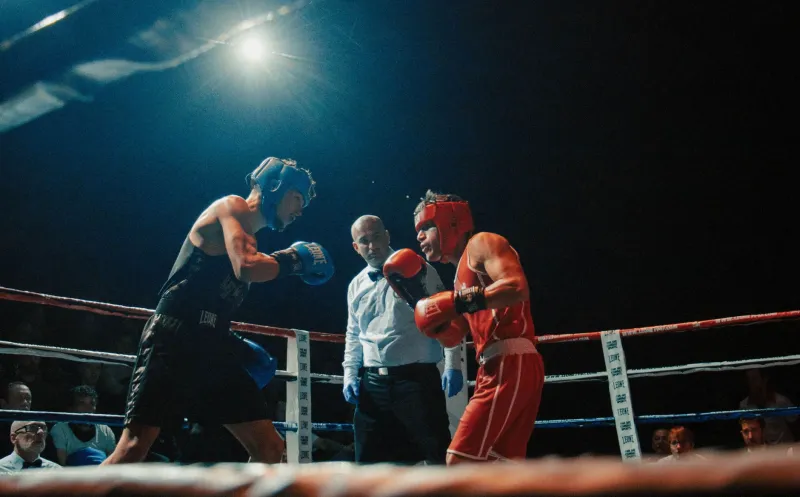
There are no highlight reels. No official records. No sanctioning body handed out licenses or tracked win-loss columns. What existed instead was something rawer and, depending on who you ask, more honest — a sprawling, loosely connected underground of smoky tournament halls, converted warehouses, and roadside venues where men settled questions that the mainstream sporting world hadn't yet figured out how to ask.
Who was the toughest guy in the room? What actually worked when the rules disappeared?
The fighters who answered those questions in the 1970s and 1980s never got a Netflix documentary. Most of them never got a paycheck worth mentioning. But the techniques they hammered out on each other's bodies, the mental frameworks they built through necessity, and the culture they quietly seeded across regional gyms helped lay the foundation for everything American combat sports became.
This is their chapter. And it's almost gone.
Smoke, Folding Chairs, and the First Real Rules: There Weren't Any
Picture a VFW hall in central Ohio, circa 1979. Folding chairs ring a square of wrestling mats duct-taped together at the seams. The crowd is maybe sixty people — fighters, their coaches, a few curious locals who heard about it through someone who heard about it from someone else. There's no announcer. No ring card girl. The "referee" is just the most respected guy in the building, and his job is mostly to stop things before someone ends up in a hospital.
This was the circuit. Or one version of it, anyway.
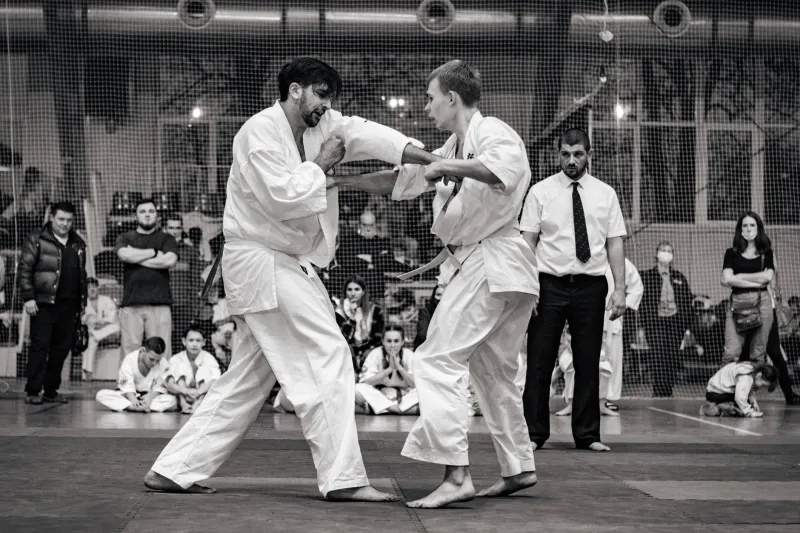
Similar scenes played out across the country — in California dojos that doubled as garages, in Midwest barns, in Southern gyms that hadn't updated their equipment since the Eisenhower administration. The formats varied wildly. Some events allowed almost everything. Others drew informal lines around eye strikes or groin shots, enforced entirely through social pressure. There were no unified rules because there was no unified organization. It was American martial arts in its most decentralized, most chaotic, and arguably most creative form.
"You had karate guys, you had wrestlers, you had street fighters who'd read a book about judo," recalls one veteran competitor from the Texas regional scene who asked to be identified only by his gym nickname, Brick. "Everybody thought their thing was the thing. The mat had a way of sorting that out real fast."
The Education You Couldn't Get in a Dojo
What the shadow circuit produced, above everything else, was a specific kind of education — one that no traditional martial arts school of that era was equipped to offer.
In a sanctioned competition, even a relatively open one, the rules create a kind of artificial ceiling on what you need to know. You train for the environment you're fighting in. But in a no-rules or near-no-rules setting, that ceiling vanishes. Suddenly a pure striker has to worry about takedowns. A wrestler has to think about what happens when someone tries to gouge his eyes or slam his head into the floor. A judoka has to consider what comes after the throw.
The fighters who thrived in these circuits didn't necessarily have the best technique in any single discipline. They had something harder to teach: the ability to adapt in real time, under real pressure, against someone who was actively trying to hurt them in ways they might not have prepared for.
"Cross-training wasn't a marketing term back then," says a retired competitor from the Southern California scene who spent nearly a decade working these events before they gradually faded out. "It was survival. You figured out what you were missing because someone showed you — the hard way."
That trial-by-fire approach to skill development produced fighters with an almost instinctual fluency across ranges and positions. Some of them later became coaches who quietly shaped the early MMA generation. Others just went back to their day jobs, carrying a set of skills and a mental toughness that never showed up on any official record.
The Records That Live in Memory
One of the most striking things about researching this world is the near-total absence of documentation. Photographs are rare. Video footage is almost nonexistent — and what does exist tends to be shaky, poorly lit, and incomplete. Most event organizers deliberately avoided creating paper trails, partly out of legal caution, partly just out of habit.
What remains is oral history. And that clock is ticking.
The men who competed in these circuits are now in their sixties, seventies, and beyond. Some have passed. Others have simply moved on and don't talk about it much — either because the memories are complicated, or because they never thought their stories were particularly remarkable. They were just doing what they did.
Tracking them down requires patience and a willingness to follow leads through layers of referral. You talk to an old-timer at a gym in Phoenix who mentions a guy he used to travel with to events in New Mexico. That guy knows someone in Kansas City. That someone remembers a tournament organizer in Indiana who kept handwritten notes that might still be in a box somewhere in his daughter's attic.
It's a living archive, and it's fragile.
What the Sanctioned World Never Fully Replicated
Here's something the veterans of the shadow circuit will tell you, almost universally, if you get them talking: there's a mental component to competing without rules that simply cannot be manufactured in a controlled environment.
In a sanctioned bout, even a brutal one, both fighters know there's a referee who will intervene. There's a doctor at ringside. There's a structure that, however imperfect, exists to protect them from the worst outcomes. That knowledge — even if it's operating below conscious awareness — changes how you fight. It changes how much you commit. It changes what you're willing to risk.
In the shadow circuit, that net wasn't always there. Or if it was, it was thin and informal and you weren't entirely sure it would hold.
"You learned what you were actually made of," says Brick. "Not what you thought you were made of. What you actually were. Some guys found out they were more than they thought. Some guys found out the opposite. Either way, you knew."
That kind of self-knowledge — forged in genuinely uncontrolled conditions — is something that modern combat sports training, for all its sophistication, struggles to replicate. You can simulate pressure. You can create high-stakes sparring. But you can't fully simulate the absence of a safety net.
Preserving What's Left
A small number of researchers and martial arts historians have started working to document this era before it vanishes entirely. The effort is grassroots, underfunded, and racing against time.
What they're finding, in interview after interview, is a community of men who share a quiet pride in what they experienced — and an equally quiet frustration that it's been largely written out of the official story of American martial arts. The narrative tends to jump from traditional dojo culture straight to the UFC's 1993 debut, as if nothing happened in between.
A lot happened in between.
The fighters of the shadow circuit were the bridge. They were the ones asking the hard questions about what actually worked, absorbing the answers through their bodies, and passing what they learned forward — to students, to training partners, to anyone willing to listen.
They didn't do it for the cameras. The cameras weren't there.
Maybe that's exactly why it mattered.