Show Me the Money: The Real Financial World Fighters Live In When the Cameras Go Dark
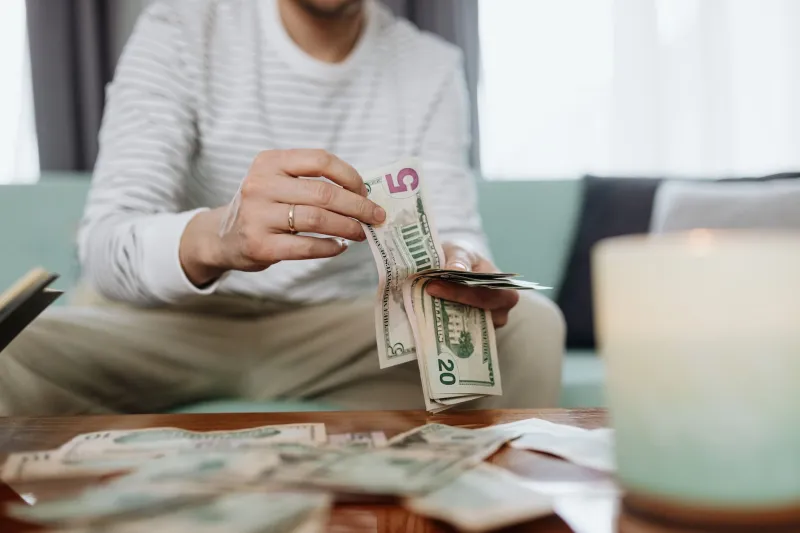
The contract number gets announced, the crowd reacts, and somewhere a fighter's manager nods like it all makes sense. What the crowd doesn't hear is the conversation that happened three weeks earlier — the one about the side arrangement, the appearance fee that doesn't show up on any official documentation, the piece of a regional streaming deal that gets paid out in cash at a hotel lobby in Columbus.
Combat sports has always had a financial underground. It's not a secret so much as a story nobody with institutional power has any incentive to tell clearly.
What the Official Numbers Actually Mean
Let's start with the basics, because a lot of fans genuinely don't understand the gap between what gets announced and what a fighter takes home.
A regional MMA fighter making $3,000 to show and $3,000 to win sounds like decent money for a night's work — until you subtract the gym's cut (typically 10 to 20 percent), the manager's percentage (another 10 to 20), travel and lodging if the promotion doesn't cover it, corner fees, medical testing costs, and the licensing fees some states charge. A $6,000 win purse can realistically net a fighter somewhere in the $2,500 to $3,500 range. Out of that, they're expected to cover months of training camp expenses.
The math, as one veteran regional promoter put it bluntly, "doesn't work unless you're already famous or you're cheating the math somewhere."
Fighters cheat the math in all kinds of creative ways.
The Side Bet Economy
Side betting in combat sports isn't new — it predates sanctioned boxing by centuries. What's changed is the infrastructure. Private group chats, encrypted messaging apps, and tight-knit regional fight communities have made informal wagering on bouts both easier and more sophisticated.
At the regional and semi-professional level, side bets between fighters, their camps, and trusted community members are widespread enough that some fighters factor them into their pre-fight financial planning. The amounts vary wildly — from a few hundred dollars between training partners to arrangements that run into the low five figures for particularly anticipated regional matchups.
The legal status of these arrangements varies by state and context, which is exactly why nobody talks about them publicly. But the practice is common enough that multiple fighters and managers, speaking on background, described it as a normalized part of the regional fight economy — not a fringe behavior.
"It's not about the money, it's about having skin in the game beyond the purse," one regional competitor explained. "When you've got your own money on yourself, the training hits different."
Private Tournament Purses and the Invite-Only Circuit
Beyond individual bouts, there exists a circuit of private and semi-private tournaments that operate largely outside mainstream coverage. Some are sanctioned, some are not. Some offer prize money that dwarfs what fighters could earn on comparable regional cards. All of them require being known — having a reputation in the community that gets you the phone call.
These events range from legitimate, professionally run tournaments with real medical oversight to far grittier affairs where the rules are flexible and the payouts are cash in an envelope. The common thread is exclusivity and the absence of cameras — or at least the absence of cameras that broadcast anywhere a promotion lawyer might see.
For fighters who can access this circuit, the financial upside is real. For fighters who can't — who lack the connections or the reputation — it's an invisible economy they know exists but can't enter.
The Sponsorship Hustle Nobody Talks About
The official sponsorship world — banner patches, branded gear, social media deals — is visible and increasingly professionalized. The unofficial version is something else.
Local business sponsorships, particularly in smaller markets, often operate on handshake agreements with no formal contracts. A car dealership owner who trains at a fighter's gym throws $500 toward training camp in exchange for a shout-out and a photo. A supplement company with no real marketing budget gives a fighter $200 a month in product plus a small cash payment to post occasionally. A regional restaurant chain pays a fighter to appear at a promotional event with no paperwork involved.
None of this is necessarily improper — informal business arrangements are legal — but the aggregate of these micro-deals can meaningfully supplement a fighter's income in ways that never appear in any public accounting of what the fight game pays.
The fighters who are good at this hustle treat it like a second job. They're constantly networking, constantly pitching, constantly converting their local visibility into whatever cash equivalent they can negotiate. The fighters who aren't good at it — or who find the business side uncomfortable — often end up subsidizing their training careers with day jobs that compromise their recovery and preparation.
The People Behind the Curtain
Managers and promoters occupy an interesting position in this ecosystem. The good ones — the ones fighters actually trust — function as financial advisors as much as career strategists. They know which promoters pay reliably and which ones find reasons to reduce purses after the fact. They know which private events are worth the risk and which are setups. They know how to structure a fighter's income streams so that the official purse is a floor, not a ceiling.
The less scrupulous ones exploit exactly the same information asymmetry in the opposite direction.
This is the financial reality of American combat sports for the vast majority of practitioners — not the eight-figure UFC contracts that dominate the headlines, but a grinding, creative, sometimes legally ambiguous hustle that determines whether a fighter can afford to pursue the thing they love or has to watch it slowly become impossible.
The lost fist in this story belongs to every fighter who was good enough to compete but couldn't figure out how to pay for the privilege. That number is enormous, and it never makes the highlight reel.