When the Judges Leave the Room: Inside the Brutal World of Elimination-Style Combat Tournaments
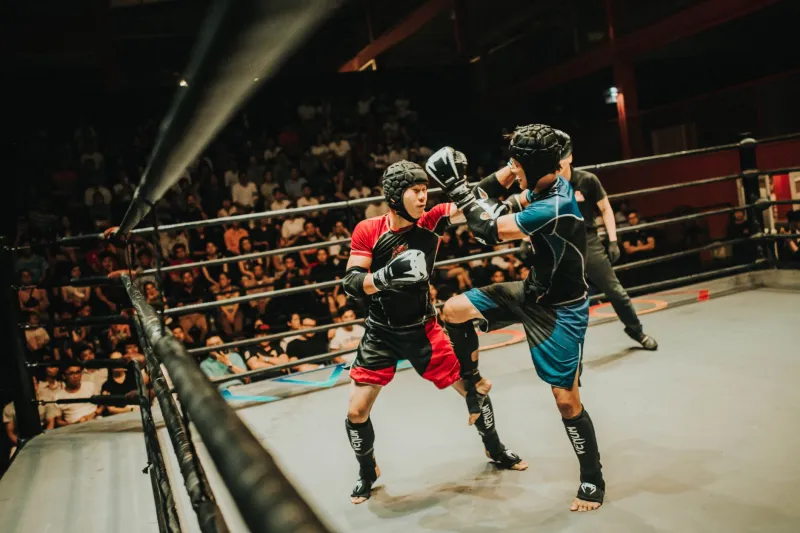
Somewhere between a gravel parking lot in eastern Tennessee and a converted livestock barn outside Tulsa, a different kind of champion gets made. No panel of judges. No ten-point must system. No one tallying takedowns on a clipboard. The format is older than boxing gloves and simpler than anything you'll see on pay-per-view: fight until someone can't continue, and keep fighting until only one man is left.
They call it last man standing. And across pockets of rural and semi-rural America, it's quietly becoming one of the most talked-about formats in combat sports circles — even if nobody's talking about it on television.
The Philosophy Behind the Format
Ask any organizer of these events why they ditched traditional judging and the answer comes fast, almost rehearsed, like they've been waiting for someone to finally ask.
"Judges bring politics," says one longtime promoter who runs quarterly tournaments across the mid-South and asked to remain unnamed. "I've watched guys win belts they didn't earn. I've watched great fighters get robbed on cards that smelled funny. This format doesn't allow for any of that. You either stop people or you don't."
The philosophy isn't complicated. In a last man standing bracket, fighters compete in a single-elimination format — sometimes double elimination depending on the organizer — where a match ends only by submission, knockout, or a fighter's corner throwing in the towel. Points don't exist. Close rounds don't exist. If you're still upright and your opponent isn't, you move forward. The bracket keeps thinning until one fighter has beaten everyone in front of them.
Proponents argue this is closer to the original spirit of tournament combat, pointing to historical precedents stretching back through vale tudo events in Brazil, the early UFC before it had weight classes, and even further back to the ancient Greek tradition of pankration, where athletes competed in open-bracket formats until a winner emerged through pure attrition and skill.
"This isn't a new idea," says Dr. Marcus Fells, a combat sports historian based out of Ohio who has studied American fighting subcultures for over a decade. "What's new is the revival of it in a modern context, and the fact that it's happening outside any sanctioning body. That's what makes it interesting and, depending on your perspective, either exciting or concerning."
Who Shows Up
The fighters these events attract aren't the ones you typically see in the UFC's developmental pipeline. They tend to be older — late twenties through mid-forties — with backgrounds that cut across disciplines in ways that formal gyms rarely produce. You'll find a guy who spent six years training judo in a church basement standing across from someone who came up through old-school American wrestling before spending a decade in boxing gyms.
What they share, almost universally, is a frustration with how mainstream competition measures success.
"I went 8-4 in sanctioned fights and every loss I took was a decision," says one fighter, a former Marine from rural Kentucky who has competed in three of these tournaments over the past two years. "Two of those decisions I know I won. So what does my record actually tell you? Nothing. These tournaments tell you something real."
That sentiment echoes across the community. Fighters who feel burned by judging inconsistencies, or who simply prefer a format that leaves no room for interpretation, are drawn to events where the outcome is unambiguous. You finish your opponent, or your opponent finishes you.
The physical demands are also a draw for a certain type of competitor. Winning a last man standing tournament means fighting multiple times in a single day or across a weekend, depending on bracket size. Conditioning becomes as important as technique. A fighter who can stop someone cold in the first round but fades badly in a second or third bout will lose to a durable, well-rounded competitor who manages energy intelligently. It rewards a complete game in ways that a single scheduled fight simply cannot.
The Organizers Living in the Margins
Running these events is not without risk, and the people who organize them know it. Depending on the state, unarmed combat events require licensing, medical personnel, and oversight from athletic commissions. Many of these tournaments operate in legal gray areas — held on private property, framed as private gatherings, and kept deliberately low-profile.
Organizers tend to be former fighters themselves, people who built reputations on regional circuits before transitioning into promotion. They rely on word of mouth, closed social media groups, and personal networks to fill brackets and attract spectators. Entry fees are modest. Prize money, where it exists, is often pooled from entry costs rather than drawn from corporate sponsorship.
"We don't advertise," confirms one organizer who runs events in the Pacific Northwest. "You get in because someone vouches for you. That keeps the quality up and keeps the wrong attention away."
The medical question is one that combat sports scholars raise consistently. Without mandatory ringside physicians, there's no guarantee that a fighter taking cumulative damage across multiple bouts in a single day will receive adequate care. Organizers of more established events counter that they do bring medical personnel and that fighters sign detailed waivers acknowledging the risks. But the patchwork nature of the scene means standards vary wildly from one event to the next.
What It Actually Proves
The deeper question hanging over all of this is whether the format actually produces a truer champion, or whether it simply rewards a different and narrower skill set.
Dr. Fells is thoughtful on this point. "There's an argument that finishing ability is the purest expression of fighting skill. If you can consistently end fights, that's meaningful. But elite grappling, elite defensive boxing, elite ring generalship — these are real skills that don't always produce finishes. A judging system, when it works properly, is supposed to capture those contributions. The problem isn't the concept of judging. It's the execution."
Fighters who've competed in both worlds tend to land somewhere in the middle. They value what the format demands of them without dismissing what sanctioned competition offers.
"I've done both and they're different tests," the Kentucky fighter says. "Sanctioned fights taught me to be sharp for one fight. These tournaments taught me to be a machine for a whole day. I needed both."
A Mirror Held Up to the Mainstream
What's most striking about the last man standing circuit isn't the brutality, though that element is real. It's what the format's growing appeal says about how a segment of the fighting community views mainstream combat sports right now — suspicious of gatekeepers, skeptical of scorecards, and hungry for a result that can't be argued away in a post-fight press conference.
Whether that appetite grows into something larger, or whether it stays tucked away in barns and fields far from the nearest athletic commission office, remains an open question. For now, somewhere in rural America this weekend, a bracket is being drawn up and a champion is getting decided the old way.
No judges required.