Off the Grid and Deadly: The Shadow Coaches Quietly Building the Next Wave of American Fighters

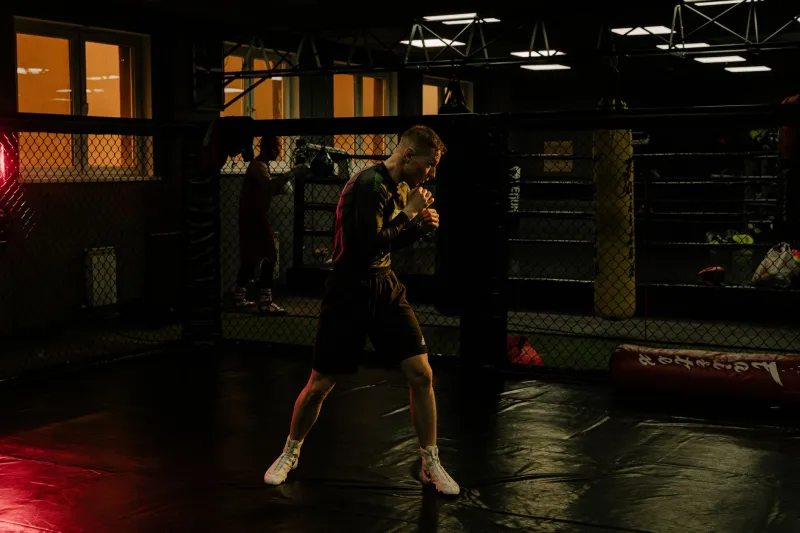
Somewhere in the industrial fringe of a mid-sized American city, there's a building with no sign out front. The parking lot is cracked asphalt. The ventilation is whatever the open bay door provides. Inside, a man who competed in three different combat disciplines across four decades is teaching a twenty-two-year-old how to make someone's skeleton work against them.
This coach hasn't been on a podcast. He doesn't have a website. The fighter he's developing doesn't have a manager yet. And none of that is an accident.
The Mainstream Has a Gravity Problem
The major gym ecosystem in American combat sports operates like any other industry cluster: it pulls resources, talent, and attention toward established centers. The big-name academies in Las Vegas, Los Angeles, South Florida, and a handful of other hubs attract fighters because they attract other fighters, and the network effects are real. You want to spar with the best, you go where the best are.
But gravity has a shadow side. The same force that pulls elite talent into these systems also creates conformity. When everyone trains together, everyone starts to look like everyone else. Techniques get standardized. Game plans converge. The competitive ecosystem, paradoxically, can suppress the kind of radical innovation that produces genuinely new threats.
The coaches operating outside that gravity field aren't constrained by it. They're not managing egos across a roster of ranked fighters. They're not beholden to a promotional relationship that might discourage certain stylistic choices. They're free to be weird, and in combat sports, weird is often where the breakthroughs live.
Profiles From the Periphery
The shadow mentor scene isn't monolithic. These coaches come from different backgrounds, work in different disciplines, and hold wildly different philosophies. What they share is a refusal to subordinate their methods to the expectations of the mainstream system.
One pattern that shows up repeatedly is the coach with deep roots in a traditional art who has spent decades cross-referencing that foundation against modern combat reality. These aren't the caricature traditionalists who dismiss everything post-1985. They're rigorous thinkers who identified specific principles in older systems — principles that got stripped out during the sport's modernization — and figured out how to reintegrate them in ways that work against contemporary competition.
The fighters they develop often have a quality that's hard to name but easy to recognize: they're not predictable in the way that mainstream-trained fighters sometimes are. Their setups don't follow the standard templates. Their defensive responses are slightly off the expected rhythm. Opponents who've prepared extensively using available footage still find themselves encountering something they didn't fully game-plan for.
Another archetype is the coach who came up through regional circuits and underground competition before the sport formalized, who carries institutional knowledge that simply wasn't documented anywhere. These are people who figured things out the hard way, against real resistance, without the benefit of the analytical infrastructure that exists today. Their methods aren't always explainable in the language of modern sports science, but the results have a consistency that serious fighters recognize.
Why the Talented Choose the Obscure
It seems counterintuitive. A genuinely promising fighter, someone with real upside, bypassing the name-brand academies to work with a coach nobody's heard of in a gym nobody's photographed. The logic becomes clear when you talk to the fighters who've made that choice.
The ratio matters. In a major academy with thirty fighters on active rosters, a developing prospect competes for coaching attention with people who are already generating revenue. The economics are real. The head coach's time flows toward the fights that are already scheduled, the careers that are already producing. A young fighter without a track record is, in practical terms, a long-term investment that the business model may not prioritize.
In a small operation with an independent mentor, that same fighter might be one of three people being developed. The coaching attention is concentrated. The feedback loop is tight. Problems get identified and addressed in days rather than weeks. The development curve compresses in ways that simply aren't possible in larger operations, regardless of how talented the staff is.
There's also a philosophical alignment factor. Some fighters, particularly those with unusual physical profiles or unorthodox instincts, find that mainstream systems want to sand down their edges rather than sharpen them. A coach who built their entire career outside the mainstream is more likely to look at an unusual fighter and see potential rather than a deviation from the template.
The Methodology Gap
What actually happens in these programs that produces dangerous fighters?
The honest answer is that it varies enormously, but several themes recur. Shadow mentors tend to spend more time on the conceptual architecture of fighting — the underlying principles that generate technique — rather than the techniques themselves. A fighter who understands why a movement works can adapt it under pressure. A fighter who only knows what the movement looks like will lose it when the conditions change.
These coaches also tend to be more comfortable with ambiguity in training. Mainstream systems often favor controlled, reproducible drill environments because they're easier to scale and teach. Independent mentors are more likely to put fighters in messy, undefined situations early and often, developing the improvisational capacity that high-level competition actually demands.
Physical preparation in these programs is frequently heterodox. Some coaches draw on strength and conditioning traditions that predate the current sports science consensus. Others have developed their own protocols through decades of observing what actually produces durable, explosive combat athletes versus what looks good on paper. The results aren't always explainable in standard frameworks, which is part of why they don't get replicated in mainstream programs — you can't franchise what you don't fully understand.
The Price of Staying Outside
The independent path has real costs, and the coaches who walk it know it.
Fighters developed outside the mainstream system face structural disadvantages when it comes to promotion, management, and exposure. The industry's networks are built on relationships that form inside established ecosystems. A fighter without those connections may be technically superior to ranked competitors and still find themselves invisible to the people who control access to meaningful opportunities.
The coaches feel this too. There's no infrastructure supporting their work — no sponsors, no media relationships, no alumni networks generating referrals at scale. The operation survives on reputation within a small community and the occasional fighter who breaks through visibly enough to draw attention back to where they came from.
Some coaches have made peace with this. They're not building brands. They're building fighters, and the distinction matters to them in ways that are difficult to explain to people who don't share the orientation.
The Legend Finds Its Own Way
The sport has always had a version of this — the mentor who exists outside the visible hierarchy, whose influence shows up in fighters rather than headlines. What's different now is the degree to which the mainstream system has consolidated, which paradoxically creates more space for the outliers to develop genuinely distinct approaches.
The next wave of American fighters won't all come from the established academies. Some of them are being shaped right now in buildings with no signs, by coaches with no followers, using methods that don't have names yet.
The lost fist finds its way home eventually. It always does.