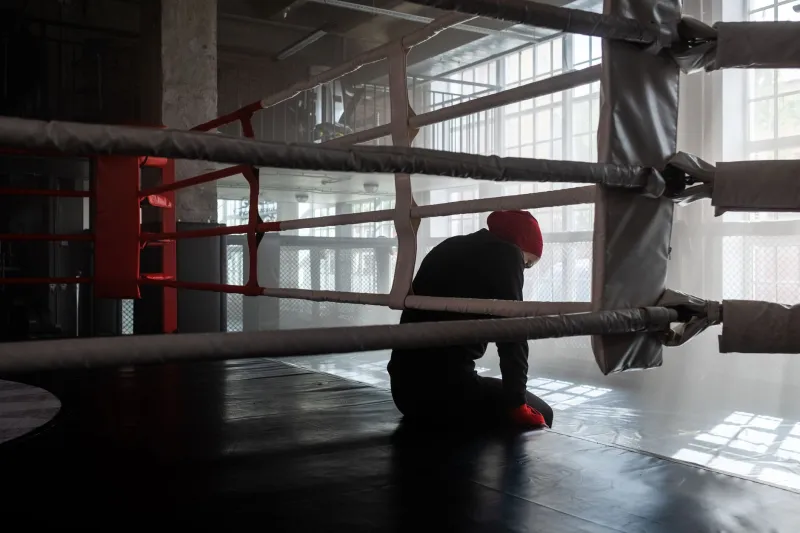
Honor Before the Contract: The Unwritten Rules That Real Fighters Still Live By

You won't find it in any athletic commission handbook. There's no clause for it in a fighter's promotional contract, no referee instruction that covers it, no Instagram post that fully captures it. But spend enough time around serious fighters — the ones who came up in gyms where respect was earned through sweat and lineage, not follower counts — and you'll start to feel it.
There's a code. And a lot of people think it's dying.
Where the Code Comes From
To understand what's being lost, you have to understand where it came from. Underground circuits, bare-knuckle events, and informal fighting communities didn't develop their honor systems by accident. They developed them out of necessity.
When there's no governing body to resolve a dispute, no promoter to enforce conduct, and no legal framework to appeal to, the community itself becomes the enforcement mechanism. Reputation is currency. Your word is your contract. How you carry yourself before, during, and after a fight determines whether you'll ever be invited back — and whether the fighters around you will have your back when things go sideways.
In those environments, certain behaviors became non-negotiable. You don't attack a man who's already submitted. You don't take a cheap shot during a handshake. You don't talk down an opponent's lineage to make yourself look bigger. You show up when you say you'll show up. And if you lose, you lose clean — no excuses, no drama, no blaming the crowd or the surface or the rules.
These weren't written down anywhere. They didn't need to be. Everyone knew.
Lineage and the Weight of Who Taught You
One of the most distinctly underground principles — and one that still runs deep in traditional martial arts communities across the US — is the concept of lineage as identity. Who taught you matters. Where you came from matters. Not as a credential for marketing purposes, but as a statement of values and accountability.
When a fighter in these circles introduces themselves, the question that follows isn't "what gym do you train at?" It's closer to "who are you under?" The answer carries weight. If your instructor has a reputation for producing disciplined, honorable fighters, that reputation extends to you. And if you act dishonorably, it reflects back on them.
That chain of accountability creates something that no sanctioning body has ever successfully manufactured through regulation: genuine investment in conduct. You're not just representing yourself. You're representing everyone who poured time into you, and everyone they learned from before that.
In a landscape where fighters switch gyms like they're changing streaming subscriptions, that sense of lineage feels increasingly rare. But it hasn't vanished entirely. Find the right gym in the right city — the ones that don't advertise heavily, the ones where new members train for months before they're trusted with certain knowledge — and you'll still find it alive and functioning.
Territory, Respect, and the Art of the Introduction
Another dimension of the underground code that rarely gets discussed in mainstream combat coverage is the concept of territorial respect — and it's more nuanced than it sounds.
In informal fighting communities, walking into another fighter's space carries protocol. You don't show up at a gym you've never trained at and immediately start challenging people or throwing your weight around. You observe. You introduce yourself properly. You let the culture of the room dictate your behavior before you assert your own presence.
This isn't weakness. It's intelligence. It's the recognition that every fighting community has its own rhythm, its own hierarchy, its own set of expectations — and that a stranger who immediately tries to impose their own energy is either ignorant or disrespectful. Neither plays well.
The fighters who travel well — the ones who can walk into a new gym anywhere in the country and immediately earn genuine respect — are almost always the ones who understand this instinctively. They watch before they act. They ask before they assume. They earn their place in the room before they try to own it.
What Regulation Took Away
Here's where it gets complicated, and where the conversation gets genuinely uncomfortable for people on both sides.
The formalization of combat sports has been, on balance, a good thing. Fighters are better protected. The industry is more sustainable. Opportunities exist now that simply didn't before. Nobody seriously argues that we should return to completely unregulated fighting environments.
But something got traded away in that process, and fighters who came up before the full institutionalization of the sport will tell you exactly what it was: the culture of personal accountability that exists when there's no external authority to appeal to.
When there's a commission, there's a rulebook. When there's a rulebook, there's a tendency to look for the edges of what's technically permitted rather than what's genuinely honorable. The question shifts from "is this right?" to "is this allowed?" Those aren't the same question, and the gap between them is where the code used to live.
Some fighters actively seek out underground and semi-sanctioned events precisely because they want to operate in that space — where the community's judgment is the final word, where your reputation for conduct is as important as your win-loss record.
Keeping the Code Alive
The good news — and there is good news — is that the code isn't extinct. It's fragmented, it's harder to find, and it doesn't always have a platform. But walk into the right gym, find the right coach, and you'll still encounter fighters who carry it as naturally as they carry their technique.
They're not nostalgic about it. They're not performing it for social media. They just genuinely believe that how you fight is inseparable from who you are — and that the rules you follow when nobody's watching are the only ones that actually count.
At Lost Fist, that's a belief we recognize. The name of this site isn't just a metaphor for a forgotten technique. It's a nod to everything about fighting culture that doesn't get preserved in official records — the knowledge, the conduct, the honor that gets passed hand to hand, fighter to fighter, in gyms and back lots and dusty training halls across America.
The code is out there. You just have to know where to look.